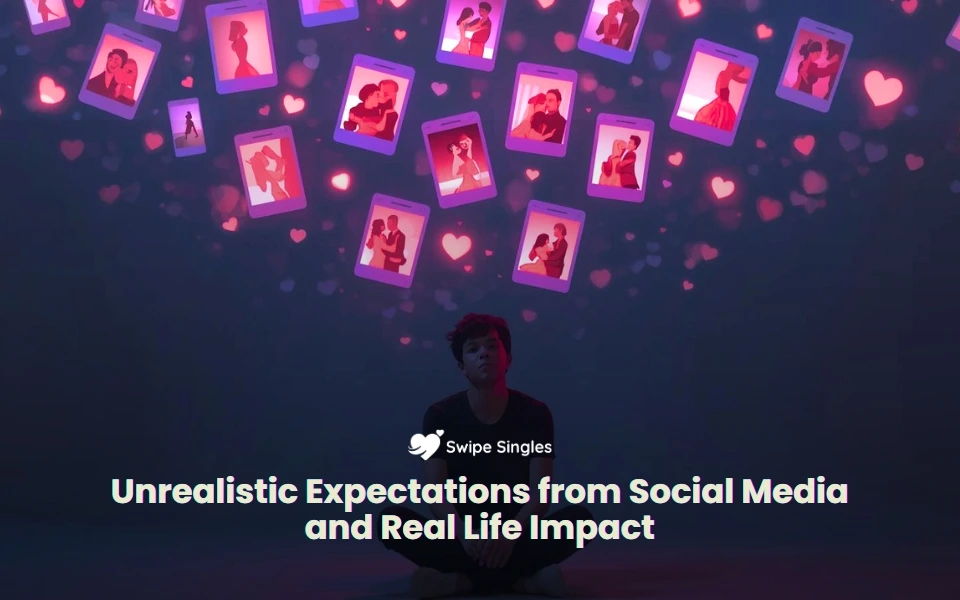
Social media shapes our understanding of beauty, success, love, and our sense of success compared to others. The issue is, however, not the sharing of only positive moments. Rather, such moments are represented as if they were the whole story. By early 2026, the average person will spend a little over two and a half hours a day scrolling, mostly looking at polished clips of someone else's best moments. Over time, those clips start to feel like reality.
This constant sharing, in turn, makes it difficult to distinguish between what is normal and what has been curated. People start comparing their real life to the edited one of someone else. The perception-reality gap is where unrealistic expectations arise.
This post will explain how these illusions arise, their impact on relationships and mental health, and what one can do to remain more grounded while still enjoying online life.
Social media is concerned with the instant that appears ideal at first sight. Face smoothers, body manipulators, and algorithms popularize posts that receive significant responses, which, in most cases, is content that appears extreme or ideal, or unattainable. And once people view these selected snapshots every day, they start to consider them as ordinary.
The same occurs with the content of lifestyle: the travel videos with the beaches that are never-ending, the luxurious goods, the perfect houses, and the stories about the hustles all appear at the top since they are clickable. And algorithms begin to reinforce such patterns, displaying you more of what you are already susceptible to.
This eventually creates a self-reinforcing loop, as people will only share their best angles, as that works. Individuals read such posts and consequently increase expectations. Due to the latter, the world of mundane days is boring, and relationships, professions, and one's own accomplishments just never approach an ideal level.
All this scrolling may be a silent contest without the knowledge of anybody. The more edited the feed, the less you can compare your life as it is to that of another person on a highlight reel. And that is what is being compared in the very center of all the unrealistic expectations, particularly regarding the lifestyle, success, beauty, and self-worth.
Social media has an incentive towards content that appears spectacular. Perfect routines, travel clips, luxury purchasing, promotions, and bookings of different kinds appear in the scene much more than in the middle of life, where the rest of it takes place. The aspirational content also works well, attracting sponsorships, so many creators resort to it out of need, since the average user is being exposed to a stream of victories.
Naturally, having watched others make milestones, one can feel that he or she is falling behind. Even the minute, daily routine appears dull when compared to feeds. What results from that pressure are unrealistic expectations of how quickly success should arrive, how exciting life is supposed to appear, and how much you should attain at a specific age.
The filters and AI tools not only make the skin appear smoother, but they also alter the appearance of faces, adjust the lighting, and produce an image of perfect beauty that is impossible to achieve in real life. By the year 2026, such edits are subtle enough and so widespread that most users will forget that they are looking at distorted images.
This simply sets a dangerous precedent: individuals start comparing themselves with the images that no one can be as natural. Adolescents and young adults are the most likely to be affected, as surveys indicate an increase in dissatisfaction with the beautified content. When the bar is placed at perfection, the real skin, real bodies, and real aging start to feel like imperfection instead of typical human qualities.

Social media shapes not only how people view themselves but also what they expect from others. Well-curated couple photos, highlight moments, and polished stories fashion a version of relationships that seems easy. When real relationships don't match that pace or polish, frustration grows. Normal challenges start to feel like signals of failure.
A couple of posts often show non-stop affection, perfect dates, and grand gestures. Through that come hidden conflict, boredom, and compromise, which are part of real closeness. This creates pressure to live up to a cinematic, not human, version of love.
Common issues:
FOMO in love shows this even more: people worry that their relationship is lacking something when others seem so much happier or more romantic online.
Friendships will also be impacted. Viewing group shots, trips, or celebrations from friends can leave you feeling excluded. Those are small moments in their life, yet these make you feel everyone else is more connected.
This leads to:
Many feel more present online than at home. Family time gets crowded out by notifications, photo opportunities, or documenting every second. Focus shifts from shared experience to getting the perfect shot.
This creates:
These pressures change how families talk, connect, and manage conflict over time. When appearances stay the focus, real closeness suffers.

Dating apps changed how people meet, but they also shifted expectations. The swipe format gives the feeling that there’s always someone better a few taps away. And even when someone is quite a good match, the idea of an endless amount of options lingers.
Profiles add to the illusion. Most people only show their best photos, charming moments, and a polished version of themselves. It isn't dishonest; it's just curated. But when everyone looks confident, adventurous, and emotionally available online, real life can feel disappointing. Real people have quirks, silences, awkward moments, and slow-building chemistry. Apps rarely show that.
This mindset changes behavior:
Researchers saw rising dating fatigue by 2026, particularly among Gen Z and Millennials. Endless comparisons and swiping made long-term attachments tougher to establish. It’s not that the options exist, but rather the options of perfection create an illusion that real relationships cannot live up to.

FOMO isn't just about travel or lifestyle anymore; it appears in relationships. Scroll through feeds of romantic surprises, anniversary trips, and matching holiday photos, and one starts to feel like maybe your own relationship is somehow not good enough. Even the healthiest partnerships sometimes feel less than when compared against curated moments from strangers.
Recent surveys from 2025 outline an already marked increase in FOMO-driven anxiety, particularly among younger couples who spend more time online. Many confessed to feelings of insecurity even when things are fine offline. That insecurity drives overthinking, comparisons that are uncalled for, and performance pressures rather than the ability to enjoy each other.
FOMO pulls people away from the present. Instead of appreciating what's real, they focus on what their relationship should look like. That gap creates distance, not closeness.
You don’t always notice when online pressure starts shaping how you think. The shift is slow and subtle, and it often shows up in your reactions long before you realize something is off. These signs are common, and most people experience at least a few of them without connecting the dots.
Here are the red flags to watch for:
If several of these sound familiar, chances are your expectations are being shaped more by feeds than by reality.
These comparisons aren’t always conscious. They slip into your thinking because you see the same polished patterns over and over. A quick way to break that spell is to look at the contrast side by side. It shows how far curated content drifts from real life.
Here’s a simple table that captures the gap:
|
Social Media Illusion |
What’s Actually True |
|
Perfect relationships |
Every couple works through conflict and dull days |
|
Effortless success |
Most wins come after months or years of unseen effort |
|
Flawless beauty |
Filters, editing, and angles erase natural features |
|
Constant happiness |
People post highlights, not the lows |
|
Endless options in dating |
Real compatibility is rare and requires patience |
When you see the differences laid out, the pressure loosens. It becomes easier to recognize when your expectations are being shaped by something that isn’t real.
When unrealistic expectations pile up, they don’t stay online. They affect how people feel day to day. Constant comparison, pressure to perform, and the sense of not measuring up can take a toll on emotional well-being. What starts as casual scrolling can slowly reshape how someone sees themselves, their body, their relationships, and their progress in life.
Common mental health effects include:
By 2025, it was found that individuals who have spent more time on image-intensive sites are more stressed in comparison. The teens and young adults are the most impacted, especially when they encounter AI-edited bodies and highlight reel relationships.
Such pressures do not necessarily result in drama breakages. Very frequently, they manifest themselves as a vague, smoldering discontent somewhere in the background. With time, this silent burden influences your thoughts unless one becomes aware of it and moves aside.
Algorithms do not merely present you with what you like but make it in exaggerated forms. Whenever you stop a travel reel that has been polished, an image that has been filtered, or a picture-perfect couple, the system notices what you are interested in and gives you more of the same. Your feed quickly turns into a small window of perfectized moments to the point that those extremes become normal.
The cycle forms impressions without you realizing it. Drama, appealing, or aspiration posts are promoted to the top as they ignite the fire. Therefore, the most frequent material that you are exposed to is also the most unrealistic. The algorithm takes high engagement as a signal to boost it, despite not being a complete context of the life of anybody.
In 2026, scientists established repetition under algorithm direction as a significant factor of comparison anxiety. The swipe strengthens a norm that reality can never be compared to. Unless you are actively filtering your feed, it becomes an echo chamber of perfection.
As soon as you get this, then you can refocus much more easily refocus what you are following and make the call on what you are seeing rather than letting the system predetermine what to say to you.
Unrealistic standards cannot be replaced by just quitting social media. It only needs to be applied with more awareness. It has the objective of building some separation between what you observe on the internet and what you want yourself or those you love to believe you can be.
Practical steps you can use right away
For relationships specifically
These habits help reset your baseline. They pull you out of comparison mode and back into a healthier, more grounded sense of what real life actually looks like.

Sometimes a few simple habits make the biggest difference. These shifts help you stay grounded, reduce comparison, and bring your attention back to things that matter offline. Here’s a quick table that keeps it easy to skim and act on.
|
Habit |
Why it Helps |
|
Phone-free hours |
Creates space for real connection and reduces mindless scrolling |
|
Curated the following list |
Keeps your feed from becoming a comparison minefield |
|
Intentional posting |
Removes pressure to perform or prove anything |
|
Offline hobbies |
Builds self-worth that isn’t tied to likes or views |
|
Digital detox weekends |
Resets your emotional baseline and improves focus |
These habits aren’t strict rules. They’re small shifts you can customize. Used consistently, they help break the cycle of unrealistic expectations and bring your attention back to your own life instead of someone else’s curated version of theirs.
Social platforms are changing fast, and so are the expectations that come with them. AI-generated influencers, hyper-realistic filters, and immersive content keep blurring the line between real and staged. As these tools become more sophisticated, the gap between online perfection and everyday life may grow wider unless people learn to navigate it with more intention.
At the same time, there’s a noticeable push toward authenticity. More users are tired of polished feeds and are turning to creators who show everyday moments without heavy editing. Some platforms have started encouraging honest content by boosting unfiltered posts and experimenting with features that limit retouching.
Governments and mental health organizations are also paying more attention. Discussions around transparency labels for AI-edited images grew throughout 2025 and will likely keep gaining traction. If these changes take hold, people may get a clearer sense of what’s real and what’s digitally enhanced.
The future isn’t just about better tech. It’s about learning to separate reality from curation so expectations don’t become impossible to meet.
Unrealistic expectations don’t show up overnight. They build slowly through small comparisons, polished posts, and moments where online life starts to feel more meaningful than real life. Social media can inspire, entertain, and connect, but it can also distort your sense of what’s normal if you don’t stay aware of how it influences you.
The goal isn’t to escape the internet. It’s to understand it. Once you see the difference between curated perfection and everyday reality, the pressure eases. You stop chasing someone else’s version of success or love and start paying attention to your own.
A healthier relationship with social media doesn’t require big changes. Just small, intentional choices. With the right habits, you can enjoy everything it offers without letting it shape expectations that no one in real life could ever meet.
Real connection grows when you step away from comparison and choose spaces that value people over performance. That’s where Swipe Singles stands out, offering a safer, more intentional way to date without the pressure of curated perfection.
With strong moderation, clear community guidelines, and privacy controls, the platform is built to support respectful and genuine interactions. If social media has made dating feel exhausting, Swipe Singles brings the focus back to what actually matters: real people and real connections.
Social media shows curated highlights rather than everyday reality. Filters, editing tools, and algorithms push idealized content, making it easy to mistake rare moments for normal life.
Yes. Constant exposure to idealized couples and lifestyles can create doubt and unnecessary comparison, even in strong relationships where nothing is actually wrong.
Comparison triggers feelings of inadequacy and pressure. When people measure their real lives against polished content, it often leads to dissatisfaction and emotional fatigue.
They tend to be. Teens and young adults spend more time on image-heavy platforms and are more exposed to filters, trends, and validation-driven content.
Curating feeds, limiting screen time, following realistic creators, and staying present offline help reset expectations without needing to disconnect completely.

A secure online dating platform for real singles seeking genuine connections, meaningful relationships, and safe dating experiences worldwide.