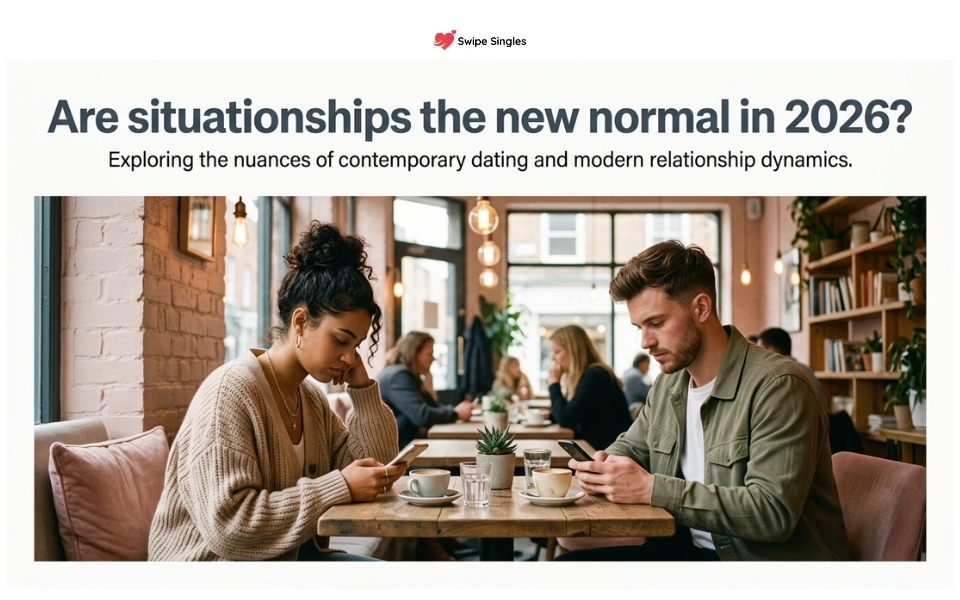
Everyone seems to be in one, talking about one, or recovering from one. The word "situationship" is now part of everyday life. It shows up in therapy sessions, TikTok comments, and group chats. What used to be something people couldn't name now has its own vocabulary, its own Reddit threads, and its own kind of exhaustion.
In fact, situationships have become so common that they're now part of a growing list of modern dating terms people use to describe relationship experiences that don't fit traditional labels. Understanding these terms can make it easier to recognize dating patterns and navigate relationships with greater clarity.
But something being common doesn't mean people are happy about it. There's a real difference between what's common and what people actually want. So what's driving situationship culture in 2026? And do most people still want real, committed relationships? That question matters, especially if you're stuck in something undefined right now.
A situationship is a romantic connection that acts like a relationship in almost every way, except no one has committed to one. You might spend weekends together. You text daily. You meet each other's friends. You feel close. But no one has said, "We're together." No one has used the word partner. And any conversation about what this actually is gets avoided.
The term took off around 2022. Tinder named it their top trend of the year. The word had appeared on 49% more user profiles between January and October. The idea itself isn't new, but having a name for it changed things. When you can name something, it's easier to accept it and easier to stay in it.
What makes a situationship different from casual dating is emotional intimacy. Casual dating stays light. A situationship involves real feelings and real closeness but without the agreement that makes it a real relationship. That gap between emotional connection and actual commitment is where all the confusion lives.
Younger generations, especially Gen Z and Millennials, use the term more than older ones. They're more comfortable naming things that don't fit traditional categories.
Several things came together to make situationships so common. None of them is going away.

1. Money and career stress pushed commitment later
Millennials delayed marriage more than any generation before them. The 2008 financial crisis, student debt, and a tough housing market made settling down feel out of reach. Gen Z grew up during a pandemic with the same pressures. When you don't know where you'll be living in two years, long-term planning feels premature.
2. Commitment got a bad reputation
Social media made breakups, divorces, and red flags into daily content. Some people raised their standards. Others raised their fear of getting hurt. Either way, more people now approach commitment with caution. We looked at this shift in more detail in our piece on why dating in 2026 feels different.
3. The word made it easier to stay
Once "situationship" became a common word, the dynamic became easier to accept. People who might have pushed for clarity sooner now have a label that makes staying feel okay.
A 2025 Match Group study surveyed 2,500 single adults. It found that Gen Z believes in true love more than any other generation. But only 55% feel ready, actually, to pursue a committed relationship.
A 2025 survey from the Institute for Family Studies found that only 31% of young adults aged 22 to 35 describe themselves as active daters. Most date once a month or less. That points to a full retreat from dating, not just a shift in how people date.
Despite all the situationship talk, people still want clarity. Gen Z increasingly reports frustration with vague relationship intentions. Most people across all generations still consider relationship labels important, even if getting there looks different now.
A situationship can feel like a real relationship from the inside. That's what makes it difficult to identify. Unlike casual dating, where expectations are often clearer, situationships exist in a grey area. The connection may involve emotional intimacy, regular communication, and shared experiences, yet still leave you questioning where you stand.
Many people stay in situationships longer than they intend because the signs are subtle. Instead of one obvious red flag, there are often small patterns that create uncertainty over time. If you're wondering whether you're in a situationship, these are some of the most common signs to watch for.
One of the biggest situationship signs is the absence of a clear relationship label, even after spending significant time together. Weeks or months may pass, but every conversation about defining the relationship gets delayed, avoided, or redirected.
Healthy relationships don't require immediate labels, but they do involve ongoing conversations about expectations and direction. If neither person can clearly explain what the relationship is becoming, it may be a sign that commitment is being avoided rather than delayed.
Communication patterns often reveal more than words. In many situationships, communication feels intense and engaging one week, then unexpectedly distant the next. You might go from daily conversations to long periods of silence without explanation.
This inconsistency creates uncertainty because you never fully know what to expect. While everyone gets busy occasionally, a recurring pattern of unpredictable communication can make it difficult to build trust, emotional security, and healthy relationship expectations.
Another common situationship sign is avoiding conversations about the future. Whether it's planning a holiday together, attending an event next month, or discussing long-term relationship goals, future-focused conversations often get brushed aside.
The relationship remains focused on the present moment. While living in the present can be healthy, constantly avoiding future discussions may indicate uncertainty about commitment or a reluctance to define where the connection is heading.
Many situationships closely resemble committed relationships. You spend time together regularly, support each other emotionally, and share experiences that look very similar to what couples do.
The difference is that neither person has openly acknowledged the relationship. There is emotional closeness without a clear relationship commitment. This can create confusion because the actions suggest a relationship, while the lack of clarity suggests something else entirely.
Mixed signals are one of the most frustrating aspects of a situationship. One day, the connection feels strong and reassuring. Next, the other person appears emotionally distant or uncertain.
This inconsistency often leaves people overanalyzing conversations, messages, and interactions in an attempt to understand where they stand. Healthy relationships are not perfect, but they generally provide a greater sense of emotional stability and predictability than situationships.
Perhaps the clearest sign of a situationship is uncertainty around expectations. You may not know whether exclusivity is expected, how much emotional investment is appropriate, or what either person ultimately wants from the connection.
When expectations remain undefined, misunderstandings become more likely. This uncertainty can overlap with other modern dating behaviors such as ghosting and breadcrumbing, where communication and commitment remain inconsistent. Clear conversations about dating expectations are often the first step toward determining whether a connection has genuine long-term potential.
What Happens When Emotional Attachment Becomes Stronger Than Commitment?
This is where situationships get painful. At some point, one person catches deeper feelings than the other. The investment becomes unequal. What started as shared ambiguity turns into one person quietly hoping for something real while the other still treats it as open-ended.
That gap between emotional investment and actual commitment is where most of the anxiety lives. It's a clear sign the dynamic needs a real conversation, even if that feels scary.
The obvious difference is the label. But that's actually the least important part. A relationship isn't just about using a word. It's about two people agreeing they're building something together. That agreement sets how you treat each other, what you can expect, and where things are headed.
|
Healthy Relationship |
Situationship |
|
Clear commitment |
Undefined status |
|
Shared goals |
Uncertain future |
|
Consistent communication |
Mixed signals |
|
Mutual expectations |
Unclear expectations |
|
Emotional security |
Emotional uncertainty |
In a real relationship, both people have direction. They're building something together, even when life gets messy. In a situationship, the connection is real but has no anchor. That's not about how much you care. It's about intention. Two people can care deeply about each other and still be in a situationship, because caring is not the same as choosing.
If you're trying to figure out which side of that line you're on, our guide to casual dating vs a serious relationship can help you figure out what you're actually ready for.
Spending a lot of time in a situationship creates a specific kind of exhaustion. It's not the sharp pain of a breakup. It's more like low-grade anxiety that never fully goes away.
You overanalyze texts. You don't know if you're allowed to call this person your partner. You avoid making plans because you're not sure they'll still be around. You feel close to someone and uncertain about them at the same time. That combination is hard on mental health. The brain reads uncertainty as a threat. It keeps the nervous system in a low-level stress state, even during good moments.
Dating burnout is another real cost. When you keep investing in a connection that never resolves, you eventually hit a wall. Dating expectations go unmet. Emotional attachment builds without a stable foundation. Mixed signals wear down your self-esteem. You start to wonder if you're asking for too much, or reading too much into nothing.
The other cost is time. People spend months or years in situationships waiting for clarity that never comes. Those are months and years not spent finding something that actually fits.
One of the biggest differences between a real relationship and a situationship is emotional availability. It means both people are open to being known, to being vulnerable, and to doing the work that real closeness requires.
Situationships often survive because one or both people aren't fully emotionally available. Past hurt, life pressure, or not knowing what they want can all cause this. Emotional availability isn't fixed. It changes as people heal and grow.
But learning to spot it, in yourself and in the people you date, is one of the most useful skills you can build. The link between anxiety, self-image, and dating runs deeper than most people realize, and understanding it can explain a lot about why certain patterns keep repeating.
No. And it's worth being honest about that.
Two people who both want something low-commitment and non-exclusive, and who have said so out loud, can have a situationship that works. The emotional stakes are what both people agreed to. No one is operating under false assumptions.
Some situationships also turn into real relationships. People meet before they're ready, take time to figure things out, and eventually make a clear choice. That happens. Growth takes time, and not every undefined connection stays that way.
What makes a situationship harmful is when one person wants more but can't say so, or says so and keeps getting vague answers. When emotional investment is uneven, and no one acknowledges it, the person carrying more weight ends up in a painful position. The problem usually isn't the missing label. It's the missing honesty.
Moving away from situationship culture doesn't mean committing faster. It means being clearer from the start about what you want and why.

Intentional dating means showing up with honesty about your goals. It means asking real questions early instead of coasting on chemistry. It means not staying in something undefined just because it's comfortable. It means choosing compatibility over convenience and being willing to talk about expectations before you're emotionally deep in something without a name.
People who date this way spend less time in the ambiguity loop. They have the hard conversations early. That means they find out quickly whether a connection has real potential, or they move on without wasting months finding out it doesn't. It's not about rushing. It's about respecting your own time.
As online dating keeps evolving, more singles are looking for this kind of experience. The endless swiping with no real direction is burning people out. Platforms like Swipe Singles are built with that in mind. The focus is on meaningful conversations and genuine compatibility, helping people move past ambiguity toward connections that actually go somewhere.
There's a clear shift in what people want from dating apps. A 2025 report found that matchmaking services focused on deeper compatibility saw a 400% surge in Gen Z clients. Younger daters are losing faith in swipe-based apps that optimize for volume over real connection.
More people want platforms that filter for genuine compatibility and encourage real conversations from the start. Swipe Singles is built around that. It's for people who are done with situationships and ready to invest in something with a real future.
If this article feels uncomfortably familiar, here's practical advice that actually helps.
Before having a difficult conversation with the other person, take some time to understand what you truly want from the relationship. Many people stay in situationships because they're focused on what the other person might want, rather than being clear about their own needs and relationship goals.
Be honest about whether you're happy with the current arrangement or simply hoping it will eventually become something more. Ask yourself if the connection is meeting your emotional needs, supporting your long-term relationship expectations, and helping you build the kind of relationship you want.
If you're struggling to find clarity, consider these questions:
The more honest you are with yourself, the easier it becomes to decide what conversations need to happen next and what boundaries you may need to set.
Staying in ambiguity because you fear the answer is still a choice. A direct, honest conversation, even an awkward one, is almost always better than more months of guessing. Healthy communication is the foundation of any relationship worth having.
When you tell someone what you want from the relationship, their response can tell you a lot about where things stand. Someone who genuinely wants to build something meaningful will usually engage in the conversation, even if they need time to think about it. They'll be willing to discuss expectations, relationship goals, and what the future might look like.
On the other hand, if the response is consistently vague, dismissive, or avoids the conversation altogether, that's important information too.
For example, if you say, "I'm looking for something more serious and I'd like to know where this is going," a constructive response might be, "I care about you too, and I'd like to talk about what that could look like." A less encouraging response might be, "Why do we need labels?" or "Let's just see what happens" after months of dating.
The goal isn't to hear a perfect answer. It's to see whether the other person's actions and words align with what they're saying. Healthy relationships are built on honesty and communication, not ongoing uncertainty.
You don't need to give an ultimatum. But know your own limit. Decide what you're willing to stay in and for how long. That internal boundary stops you from drifting forever. Our piece onsetting healthy boundaries in a relationship is a good place to start if this is something you struggle with.
This is the hardest part and often the most necessary one. If the connection isn't giving you what you need, staying won't change that. Leaving creates space for something that actually fits. If you've been wondering whether staying single might be the healthier choice right now, this article is worth reading before you decide.
Before you decide to wait and hope, be honest with yourself first.
Are both of you looking for the same thing right now?
Not eventually. Not someday. Right now. Hope is not the same as direction.
Is the effort you're putting in being matched?
If you are always the one initiating and always the one holding things together, that already tells you something.
Is this connection moving you forward or just keeping you comfortable?
There is a big difference between growing together and simply filling time.
If nothing changes in three months, will you be okay with that?
Not hoping it changes. If everything stayed exactly the same, could you genuinely live with that?
Does this person feel emotionally available for what you actually need?
Not in theory. In their actions. In how consistently they show up for you.
You do not need to overthink it. Your answers already know what you need to do. Sometimes the hardest part is just being honest enough to listen to them.
Situationships have become one of the most talked-about parts of modern dating, but their popularity doesn't mean they've replaced traditional relationships. While more people are experiencing undefined connections, most singles still want emotional intimacy, clear communication, and long-term relationship commitment.
The rise of situationships reflects changing dating habits, evolving relationship expectations, and a culture that often encourages people to keep their options open. However, the growing frustration many people feel with ambiguity suggests that clarity remains just as valuable as ever. Most people aren't looking for endless uncertainty. They're looking for genuine connections built on trust, compatibility, and shared intentions.
Understanding the situationship meaning, recognizing situationship signs early, and knowing the difference between a relationship vs situationship can help people make better dating decisions and avoid investing in connections that don't align with their relationship goals.
For singles who value meaningful conversations, emotional availability, and intentional dating, finding the right platform matters just as much as finding the right person. Swipe Singles is designed for people who want more than endless swiping, helping users build authentic connections based on compatibility, communication, and genuine relationship potential.
Ready to move beyond uncertainty and meet people looking for real connections? Join Swipe Singles and start building relationships with purpose.
A relationship involves a clear, mutual commitment. Both people have agreed they're building something together. That sets shared expectations and creates emotional security. A situationship has the same feelings, regular contact, and real closeness, but without that agreement. The connection is there. The commitment isn't. And usually, neither person has said which one they're actually in.
Yes, and it does happen. Some people meet before they're ready and get there over time. But the shift requires a real conversation. One person has to say what they want, and the other has to clearly agree to it. Situationships that turn into real relationships don't drift there. Someone makes a choice out loud. Waiting for it to happen without that conversation is one of the main reasons people stay stuck for too long.
Usually, it's a mix of real feelings, fear that asking for more will push the other person away, and the comfort of connection without full vulnerability. There's also a sunk cost element. The more time and emotion someone has invested, the harder it feels to walk away.
Gen Z talks about situationships more than any other generation. But the dynamic itself isn't new. Survey data suggests Gen Z actually reports lower rates of situationship experience than older generations. What's new is the vocabulary and the willingness to name it. A 2025 Match Group study found that while Gen Z believes strongly in long-term love, only 55% feel ready to pursue a committed relationship. That gap explains a lot.
There's no fixed rule. But if months have passed and nothing has changed, the situation has probably settled at its current level. A situationship that's been going for six months to a year without any honest conversation about commitment is unlikely to change without someone directly asking for it. Time passing is not the same as progress.
Yes, and it's often the right call. You don't owe anyone endless emotional availability just because you care about them. If a connection isn't meeting your needs and the other person won't have an honest conversation about it, leaving isn't giving up. It's choosing your own well-being. No explanation or permission needed.
The most reliable signs are no relationship label after a long time, inconsistent communication, avoiding any talk about the future, acting like a couple without any real acknowledgment, and a constant underlying uncertainty about where you stand. If you regularly wonder whether you're allowed to call this person your partner, that uncertainty is itself a major sign.
Yes, they can make them much easier to fall into. Apps built for volume and novelty reduce the pressure to define any single connection. When it's easy to keep several undefined connections going at once, the motivation to commit to one goes down.
The impact of social media on modern dating plays into this too, shaping how people communicate and how easy it's become to keep things permanently undefined. Apps built around intentional dating attract users who arrive with clearer goals, which naturally makes things less likely to stay undefined.

A secure online dating platform for real singles seeking genuine connections, meaningful relationships, and safe dating experiences worldwide.