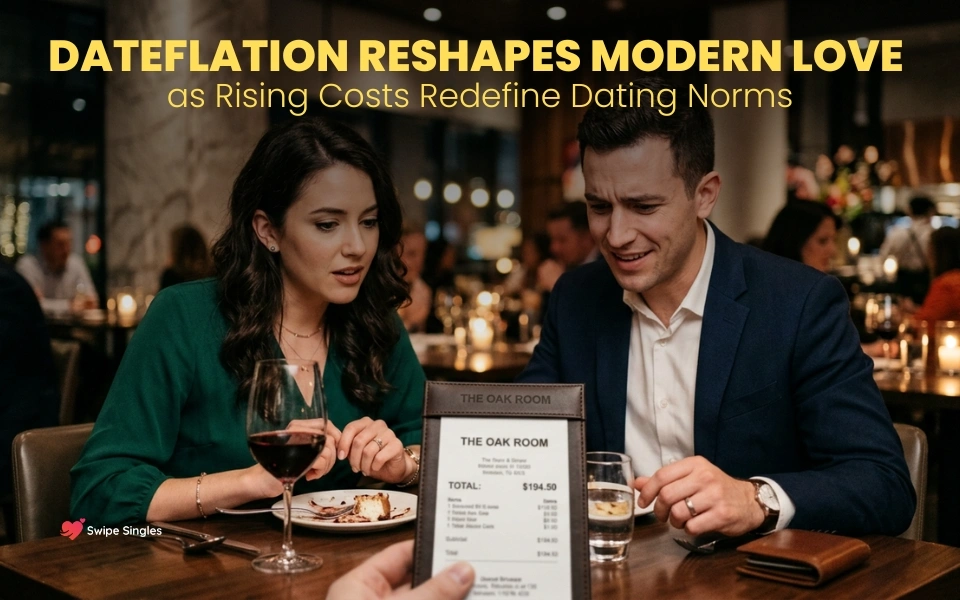
Dating is no longer a simple social ritual, which is getting more and more expensive and optional among the younger generation. In cities around the world, a single evening out has now gone way beyond dinner, silently redefining the nature of relationship formation and development.
New statistics indicate a definite change. The median cost of a date is now nearly $200, and the number of young adults dating is dropping. A combination of these trends is shaping what analysts are terming a new era of relationships in the modern world.

The numbers behind dating today reveal just how quickly costs have climbed. A typical date in 2026 now averages $189, up from $168 just a year earlier. Over time, these small increases add up, pushing the estimated annual dating spend to $2,323.
This steady rise reflects more than just inflation. It includes everything from dining and transportation to grooming and entertainment. What was once a casual expense is now starting to feel like a recurring financial commitment.
As costs climb, dating is no longer just about connection, but it is becoming a question of affordability.

To understand the pressure, it helps to compare dating costs with broader economic trends. While overall inflation sits at 2.7%, the cost of dining out on many dates has risen faster at 4.1%. Even food prepared at home has increased by 2.4%.
This gap matters. Dating often relies on experiences tied to discretionary spending, especially restaurants and entertainment. When those categories rise faster than general inflation, the impact on dating behavior becomes more immediate.
In simple terms, dating is inflating faster than everyday life.

With these increased costs, young adults are adapting fast. More than half of Gen Z, around 53%, now report spending nothing on dating in a typical month. Among those who do participate, many keep their budgets below $100.
It is not only a monetary judgment but also a change in priorities. Dating often becomes less important than student loans, rent, and daily expenses.
The result is a quieter social change: fewer spontaneous outings and more selective engagement.

The change does not pertain to a single area. In other countries, similar trends also result from domestic economic demands.
In Canada, the numbers reported are approximately 30 percent of the dates, and almost the same number of individuals opted to use the cheaper alternatives. In South Korea, the average amount of money spent on dates is also dropping, as a larger number of couples choose to spend their time at home instead of out.
These transformations reveal a rebalancing of the world. Although cultural norms vary, the financial aspect is commonplace: dating is being redefined through cost-saving choices.

Due to the increase in costs, perceptions are evolving. Over fifty percent of those surveyed in recent opinion polls now refer to dating as a luxury and not a habit. Meanwhile, approximately 28% acknowledge spending money on dating with the use of credit cards, as well as spending £78 on average per date.
Such a change of attitude is considerable. When dating turns out to be something that people need to budget or borrow for, it shifts its status from a casual social practice to a more planned financial choice.

Beyond actual spending, perception plays a powerful role. Nearly 41% of people find dating costs more concerning today.
This growing anxiety shapes behavior even before a date happens. It influences whether people say yes, how often they go out, and what kind of experiences they choose.
In many cases, the hesitation starts long before the bill arrives.
With the increasing financial strain, dating itself is also changing. Stay-at-home dates, which were considered secondary options, are increasingly becoming popular. Watching a film online, baking, or just being home and together is now a purposeful and functional activity.
More cost-effective decisions are also being accepted. The process of dividing bills, going to casual places, or having daytime dates is not taboo anymore, but it is anticipated.
Simultaneously, individuals are becoming more choosy. Each date is more serious with the increase in costs, which results in fewer but more meaningful interactions.
These changes go beyond personal preferences. They are indicative of more widespread shifts in the formation and development of relationships.
The reduced number of dates may translate to a lower number of people to encounter. In the long term, this can lead to postponed relationships, shifting patterns of family, and a redefinition of social norms regarding connection.
Culture has always had an effect on dating. These days, it is being influenced equally by economics.
Taken together, rising costs and declining participation point to what some analysts describe as a “dating recession.” It is not a sudden collapse but a gradual pullback.
People are dating less, spending more when they do, and thinking harder about every decision. The balance between emotional connection and financial reality is becoming more visible and more complex.
In the future, dating might be inclined towards simplicity. The activities that are low-cost, experiences, and creative options are bound to increase.
Technology can also contribute to this, as it will allow people to interact more effectively and save money on waste. Meanwhile, dating norms might also evolve and become less focused on costly excursions and more focused on authentic communication.
In many ways, dating is being redefined not by choice, but by circumstance.
Dating is not going away, but it is evolving. The once casual and frequent are becoming more deliberate and, in some cases, more constrained.
Dateflation is not just increasing prices but also transforming the way people meet, when they are dating, and what dating experiences should look like.
Even love is adjusting in a world where just about everything is becoming pricier.

A secure online dating platform for real singles seeking genuine connections, meaningful relationships, and safe dating experiences worldwide.