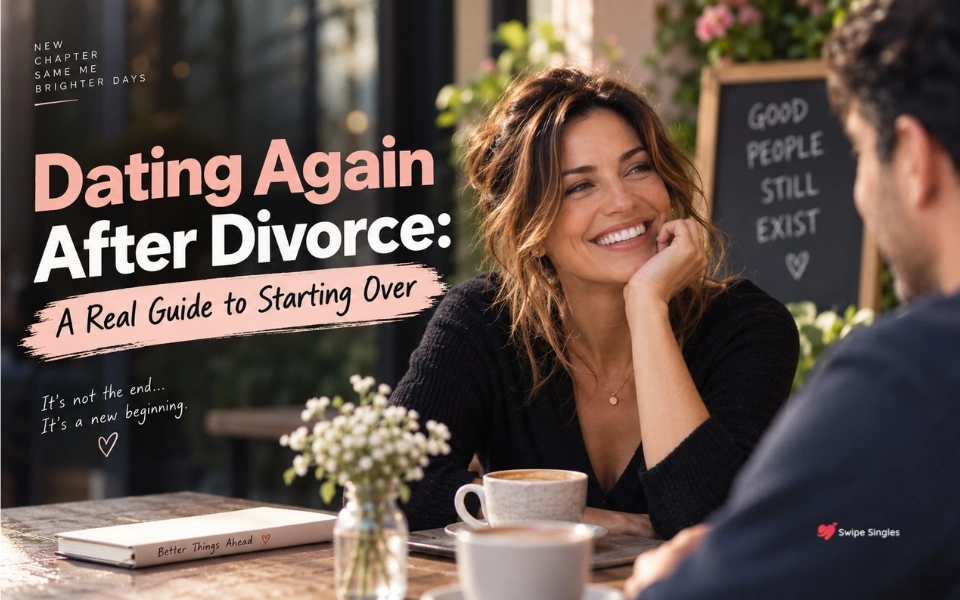
How do you start dating again after divorce? There's no fixed timeline for it. What matters more is how you feel: curious instead of anxious, open instead of guarded, dating because you want to, not because you're scared of being alone. Some people are ready in six months. Others take two years. Both are fine.
You're not the same person who got married. You know more about what you need and what you won't put up with. That's not baggage; it's just experience, and it makes the second time around a lot easier to navigate.
This guide covers when to start dating again, how to tell you're ready, what it's actually like getting back into it after a long relationship, and how to deal with the nerves.
Skip the "when" question and ask "why" instead. If you want to date because you're genuinely curious about meeting people, good sign. If it's mostly about not wanting to be alone, give it a bit more time.
A few honest signs the timing feels right:
A friend of mine waited almost three years after her divorce before dating again, not because she was stuck, but because she wanted her life sorted out first on her own. When she did start, she said it felt lighter than expected because she wasn't dating out of loneliness. That's the difference timing makes.
You'll know when a first date feels like curiosity, not pressure.
A quick gut check:
You don't need to be "fully healed" before you're allowed to date. Healing isn't a finish line. It keeps happening, sometimes while you're dating.

If you were married or coupled up for years, dating now might feel unfamiliar. The apps changed. The etiquette changed. Even how fast people talk before meeting in person has changed.
A few things that actually help:
Go slow on purpose. One or two easy conversations beat five forced dates a week.
Let it be awkward sometimes. Someone getting back into dating after fifteen years of marriage told me her first message on an app felt more nerve-wracking than a job interview. That reaction is normal, not a sign you're bad at this.
Learn the current rules before diving in. If you haven't dated in years, read up on dating app scams, since a lot has changed since you were last swiping.
Figure out what you actually want first. Casual or something more serious? Deciding casual vs serious before you start talking to people saves you from guessing mid-conversation.

A lot of the anxiety around dating again isn't about dating itself, it's about the apps. Endless swiping, vague profiles, matches that go nowhere. That's part of why Swipe Singles exists: it's built around actual intent, not just swipes. You set what you're looking for upfront, casual or serious, and matches are filtered around personality and intent rather than just a photo. For anyone starting over after divorce, that structure alone takes some of the guesswork out of getting back in.
Yes. Nerves usually mean you care about doing this well, not that something's wrong. Most people feel some version of it before their first message, first date, or first time explaining their divorce to a stranger.
Name the nerves instead of pushing through silently. You don't owe anyone your full story on a first date. "I went through a divorce a while back, still getting used to dating again" is enough.
If flirting feels rusty, that's normal too. Flirting tips can help if putting yourself out there doesn't come naturally after years of not needing to.
Divorce isn't the only reset that changes how you date. Losing a long-term partner, moving cities, or leaving a relationship that wasn't working all put you back at square one. The advice mostly overlaps, but a few things are worth saying directly:
If dating starts feeling exhausting instead of exciting, listen to that. Dating burnout is real, and catching it early saves you from forcing something before you're ready.
Example 1: A 38-year-old, two years post-divorce, realized he was ready when he noticed he'd stopped mentioning his ex in casual conversation without meaning to. Small shift, but it was real.
Example 2: A woman in her 40s, newly out of a 12-year marriage, started with coffee dates instead of dinner, an hour instead of an evening, so she could leave easily if it felt like too much. That structure gave her confidence to keep going.
Example 3: Someone coming out of a relationship that ended abruptly found that being upfront about wanting something local this time, instead of another long-distance relationship, helped her filter matches early instead of repeating the same pattern.
None of these are big dramatic moments. Just small, deliberate choices that added up.
One advantage of dating after divorce: you already know what didn't work. Use it. How much space you need, how you want disagreements handled, how fast you're comfortable moving, get clear on relationship boundaries early so you're not repeating old patterns without noticing.
If you're back on dating apps, brush up on basic dating safety, especially around sharing personal details and meeting in public early on. Apps have added more safety features since you last used them, but the basics still apply.
Starting over doesn't mean starting from nothing. You're bringing everything you've learned with you, which usually makes this round steadier than the first. Take it slow, protect your peace, and when you're ready to actually meet people with real intent instead of endless swiping, download Swipe Singles and start where you are.
Get steady on your own first, then ease in slowly. Build a profile when you're curious, not pressured. Keep early dates low-key, and be upfront about being new to this again.
Whenever you're dating out of genuine interest, not loneliness or outside pressure. No set number of months. Some people are ready in under a year, some take longer.
You can talk about the past without it derailing you, you're more curious than anxious about meeting people, and you're fine being alone. If dating feels like curiosity, not urgency, that's usually the sign.
Expect things to feel different, apps, etiquette, pacing. Go slow, keep the first few dates low-stakes, and let yourself feel a little rusty without judging it.
Yes, even for people who dated confidently before. It usually just means you care about getting it right.
Rebuild your own footing first, whatever the change was. Date at your own pace, not the one you think you should be on, and pay attention if it starts feeling like a burden instead of a choice.

A secure online dating platform for real singles seeking genuine connections, meaningful relationships, and safe dating experiences worldwide.